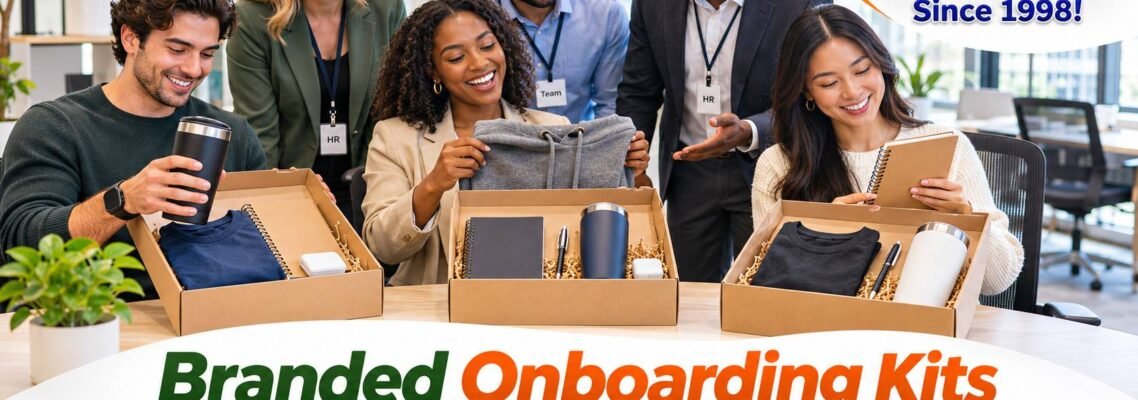
Branded Onboarding Kits: A Guide to Employee Welcome Gifts
A new employee’s first few days shape how they experience their workplace. Beyond paperwork, introductions, and training, a thoughtful welcome package can help make the transition feel more personal. For businesses hiring across departments, offices, or remote locations, employee welcome gifts also provide a practical way to introduce company culture and establish a consistent onboarding experience.
Well-planned branded onboarding kits combine useful merchandise, coordinated packaging, and company identity into one welcome experience. They can include branded apparel, drinkware, notebooks, technology accessories, and personalized messages that employees can use beyond their first day.
Creating an effective kit requires more than selecting products with a logo. HR teams, office managers, and procurement professionals must consider employee preferences, product quality, budgets, customization, shipping arrangements, and future hiring needs.
What Are Branded Onboarding Kits?
Branded onboarding kits are curated collections of company-branded merchandise and welcome materials given to employees when they join an organization. They typically combine practical workplace essentials with items that introduce the employer’s identity, values, and culture.
A typical kit might include a company T-shirt, reusable water bottle, notebook, pen, welcome letter, and small technology accessory. Businesses can adapt these items to the employee’s role, work environment, and onboarding schedule.
Unlike a collection of unrelated promotional giveaways, an onboarding kit is designed as a coordinated experience. The products, colors, decoration methods, packaging, and delivery process work together to communicate a consistent message.
Why Businesses Invest in Employee Onboarding Gift Boxes
Employee welcome packages are a tangible part of the onboarding process. Although merchandise cannot replace effective training, supportive management, or meaningful employee engagement, it can complement these efforts.
1. Creating a Welcoming First Impression
Starting a position often involves learning unfamiliar systems, meeting colleagues, and understanding expectations. A thoughtfully assembled welcome package helps acknowledge the employee as a new member of the organization.
Including a personal note from a manager or team can make the experience more meaningful than providing merchandise alone.
2. Introducing Company Identity
Branded merchandise introduces employees to the organization’s visual identity through everyday items. Consistent logo placement, company colors, and coordinated packaging can reinforce the brand across multiple departments and locations.
For organizations with distributed teams, standardized onboarding materials can help maintain a recognizable experience regardless of where employees work.
3. Providing Practical Workplace Essentials
Welcome gifts become more useful when employees can incorporate them into their routines. A durable backpack, quality notebook, comfortable branded polo, or insulated tumbler may remain useful long after the initial onboarding period.
Choosing products based on actual employee needs makes the gift more relevant than selecting items solely for their promotional appearance.
4. Supporting Remote and Hybrid Onboarding
Remote employees may not experience traditional office welcome activities. Shipping a coordinated welcome box to an employee’s home provides a physical element to an otherwise digital onboarding process.
Businesses should coordinate shipment dates, verify delivery information, and consider whether a package requires signatures or special handling.
What Should You Include in Branded Onboarding Kits?
The most effective kits balance usefulness, product quality, available budget, and the company’s culture. Rather than filling a box with numerous inexpensive items, businesses can prioritize a smaller collection of merchandise employees are likely to use.
Branded Apparel
Custom T-shirts, polos, hoodies, and jackets are common components of welcome programs. Apparel can introduce company identity while providing employees with practical clothing for work, meetings, or company events.
Before selecting apparel, consider:
- Available sizes and fit preferences.
- Fabric composition and comfort.
- Embroidery versus printed decoration.
- Logo placement and brand color accuracy.
- Care instructions and durability.
Size collection is particularly important. If employees receive apparel that does not fit, the company may need to arrange replacements, potentially increasing costs and delaying the welcome experience.
Drinkware and Everyday Essentials
Reusable water bottles, insulated tumblers, coffee mugs, and travel cups can be practical additions to employee welcome packages.
Material, capacity, lid construction, and intended use should influence product selection. A commuter may appreciate a leak-resistant travel tumbler, while an office employee might prefer a desktop coffee mug.
Notebooks and Writing Instruments
Branded notebooks and pens remain useful for orientation sessions, meetings, training, and general workplace activities.
For a more coordinated presentation, businesses can match notebook covers, pen finishes, and packaging colors to their visual identity.
Technology Accessories
Depending on employee responsibilities, onboarding packages may include:
- Wireless charging accessories.
- Charging cables and adapters.
- Laptop sleeves.
- Mouse pads.
- Webcam covers.
- Desk organizers.
Technology accessories should be selected according to device compatibility, product safety, and practical value. A product that does not work with an employee’s equipment is unlikely to be useful.
Personalized Welcome Materials
Printed welcome cards, employee handbooks, orientation schedules, and messages from leadership can give branded merchandise additional context.
A brief message explaining the company’s mission, team culture, or first-week expectations can help make the welcome box feel intentional rather than purely promotional.
How to Build Employee Onboarding Gift Boxes
Planning employee onboarding gift boxes involves product sourcing, brand preparation, packaging decisions, and delivery coordination. A repeatable process helps businesses manage these tasks without rebuilding the program for every new hire.
- Define the onboarding objective. Decide whether the kit should introduce company culture, provide workplace essentials, celebrate a new hire, or combine these purposes.
- Set the complete budget. Include merchandise, customization, setup charges where applicable, packaging, assembly, taxes, and shipping.
- Choose relevant merchandise. Select products based on employee roles, work environments, and practical needs.
- Prepare approved artwork. Use current company logos, brand colors, and approved placement guidelines.
- Review samples and proofs. Confirm product appearance, decoration quality, size, and packaging before broader production.
- Establish a fulfillment process. Determine how employee information will be collected, how packages will be assembled, and when shipments should be released.
- Plan replenishment. Create a process for tracking inventory, updating products, and accommodating changes in hiring volume.
Documenting these decisions can simplify coordination between HR, procurement, marketing, and merchandise suppliers.
How Much Do Branded Onboarding Kits Cost?
The cost of a branded onboarding kit depends on the products selected, quantities, decoration methods, packaging, fulfillment requirements, and shipping destinations. There is no single standard price that applies to every employee welcome program.
For illustration, consider a hypothetical company preparing 50 welcome packages with the following assumed expenses:
- Branded T-shirt: $14 per kit.
- Reusable tumbler: $12 per kit.
- Notebook and pen: $8 per kit.
- Packaging and assembly: $6 per kit.
- Shipping: $10 per kit.
Under these assumptions, the estimated cost would be $50 per employee, or $2,500 for 50 employees, before any applicable taxes or additional charges. These figures are illustrative, not a Digitized Logos quotation or verified market prices.
Actual pricing may vary considerably. Buyers should request a written estimate that identifies product costs, decoration charges, packaging, freight, and any applicable setup or handling fees.
How to Control Onboarding Merchandise Expenses
Businesses can manage costs by selecting fewer high-utility products, standardizing decoration specifications, evaluating quantity-based pricing, and coordinating shipments.
It is also useful to compare inventory-based programs with made-to-order purchasing. Holding merchandise can simplify some fulfillment workflows, but excess stock may create storage expenses and obsolete inventory when branding or employee requirements change.
Customization Options for Employee Welcome Kits
Customization is an important part of transforming ordinary merchandise into a coordinated branded experience.
Common decoration methods include:
- Embroidery: Often suitable for polos, caps, jackets, and selected fabric accessories where a stitched finish is appropriate.
- Screen printing: Commonly used for apparel with repeatable printed designs, subject to artwork and production requirements.
- Heat transfer printing: Useful for certain multicolor graphics and garment applications, depending on the transfer process and fabric.
- Sublimation printing: Suitable for compatible polyester fabrics and specially coated merchandise, allowing designs to be incorporated into the product surface.
- Laser engraving: Used on compatible materials such as certain metal and wood products.
The right method depends on the product’s material, artwork complexity, desired appearance, available decoration area, and production quantity.
Why Artwork Preparation Matters
One commonly overlooked production issue is the difference between artwork that looks good on a computer screen and artwork suitable for decoration.
Small lettering may become difficult to reproduce in embroidery. Fine lines can disappear at reduced print sizes. Full-color designs may also require different preparation depending on the product surface and manufacturing method.
Supplying vector artwork, approved brand colors, and clear placement instructions helps reduce revision cycles. A digital proof should be reviewed for spelling, proportions, logo orientation, and decoration placement before production is authorized.
For larger or recurring programs, approved production specifications can also help maintain consistency between the first shipment and future reorders.
Onboarding Kits for Different Work Environments
Employee needs vary by industry. An office-based employee may use different merchandise from someone working in hospitality, construction, or field services.
Corporate and Professional Offices
Consider a hypothetical consulting company that hires employees across several regional offices. Its welcome package might include an embroidered polo, insulated tumbler, premium notebook, and branded laptop sleeve.
The goal would be to provide practical accessories while maintaining consistent presentation across office locations.
Hospitality and Guest Services
A hypothetical hotel group onboarding front-desk and administrative employees might use branded drinkware, notebooks, staff apparel, and personalized welcome cards.
Employee uniforms, where required, should be selected separately according to the property’s dress standards, fit requirements, and job responsibilities.
Construction and Field Operations
A construction company might emphasize durable drinkware, weather-appropriate apparel, and field-friendly accessories. Any protective equipment included in the package must meet the relevant workplace requirements and should not be treated as ordinary promotional merchandise.
These examples illustrate potential kit configurations rather than actual Digitized Logos customer programs.
Managing Onboarding Kits Across Multiple Locations
For businesses hiring employees in different cities or states, fulfillment can become more complicated than selecting merchandise.
A centralized onboarding merchandise program can establish consistent product specifications while allowing shipments to be directed to individual employees or company offices.
Important operational considerations include:
- Employee information: Maintain accurate recipient names, addresses, apparel sizes, and delivery instructions.
- Privacy: Limit access to employee information and use appropriate processes for sharing shipping details.
- Inventory tracking: Monitor stock levels and identify products approaching reorder points.
- Packaging consistency: Use standardized packing instructions so employees receive the intended contents.
- Shipment coordination: Account for onboarding dates, carrier transit time, and possible delivery exceptions.
- Quality checks: Verify decoration, product quantities, and packaging before dispatch.
For recurring hiring, businesses may benefit from a standardized merchandise catalog or controlled company store that supports approved product selection and repeat purchasing.
The appropriate approach depends on hiring frequency, available storage, customization requirements, and the supplier’s fulfillment capabilities.
Common Mistakes to Avoid When Ordering Employee Welcome Gifts
Choosing Quantity Over Usefulness
A box filled with inexpensive merchandise may look generous but provide limited practical value. Prioritize the items employees are likely to keep and use.
Overlooking Apparel Fit
Ordering a standard range of sizes without collecting employee preferences can lead to avoidable replacements. Confirm sizing information and available options before finalizing apparel quantities.
Approving Artwork Without Reviewing Product Details
Logo placement, imprint dimensions, and color reproduction may vary across different materials. Review each product’s proof rather than assuming the same artwork will reproduce identically everywhere.
Ignoring Shipping and Assembly Requirements
Merchandise may arrive from different production sources. If multiple items must be consolidated into one welcome package, establish who is responsible for receiving, inspecting, assembling, and shipping the completed kits.
Failing to Plan for Future Hires
A welcome program that works for a single hiring group may be difficult to maintain as recruitment expands. Standardized specifications, reorder procedures, and designated purchasing responsibilities can make ongoing execution more manageable.
How to Choose a Supplier for Branded Onboarding Kits
A merchandise supplier should be evaluated on more than product selection. Businesses should also assess communication, artwork support, production processes, fulfillment capabilities, and clarity of quotations.
Before selecting a supplier, ask:
- Which products and customization methods are available?
- What minimum quantities apply to each item?
- Are samples or digital proofs available for review?
- Can merchandise from multiple product categories be assembled into one package?
- Can completed kits be shipped to individual employee addresses?
- How are damaged products, replacements, and delivery exceptions handled?
- What production and shipping schedules apply to the proposed merchandise?
- Can approved designs and specifications be retained for future orders?
Answers to these questions help buyers compare vendors based on operational requirements rather than relying exclusively on unit prices.
How Digitized Logos Can Support Employee Welcome Programs
Digitized Logos provides branded apparel, promotional products, and corporate merchandise solutions for business customers. Companies planning branded onboarding kits can explore merchandise options suited to employee recognition, workplace use, and onboarding programs.
Businesses can begin by identifying the products they want to include, their preferred decoration methods, estimated quantities, and delivery requirements. These details create a clearer basis for discussing customization, sourcing, and fulfillment.
Organizations considering recurring welcome packages should also discuss their anticipated hiring frequency, product standardization needs, and whether individualized shipments or coordinated bulk deliveries are required.
Frequently Asked Questions About Employee Onboarding Gift Boxes
What is the difference between an onboarding kit and a corporate gift?
An onboarding kit is specifically designed to welcome a new employee and support their introduction to an organization. It often combines practical workplace items with branded merchandise and orientation materials. Corporate gifts have broader applications, including customer appreciation, employee recognition, celebrations, and business relationship management.
How many products should an employee welcome kit include?
There is no universal requirement. A package containing three or four useful items may be more effective than one filled with products employees rarely use. The appropriate number depends on the company’s budget, employee needs, product quality, packaging dimensions, and intended welcome experience.
Can branded onboarding kits be shipped directly to remote employees?
Direct-to-employee shipping is possible when the supplier or fulfillment provider supports individual-address distribution. Buyers should verify assembly capabilities, shipping destinations, packaging requirements, and associated charges. Recipient information should be collected securely, and delivery schedules should account for production and carrier transit times.
Can employee onboarding gifts be personalized?
Many merchandise categories support customization, and some products may accommodate individual names, initials, or other employee-specific details. Personalization availability depends on the product, material, decoration process, and supplier. Buyers should confirm any additional production requirements and review proofs where appropriate.
How far in advance should businesses arrange welcome kits?
Planning should begin once product requirements, expected hiring dates, and estimated quantities are known. Production time varies by item, decoration method, order size, inventory availability, and packaging complexity. Companies should obtain a supplier-specific schedule and include time for artwork approval, assembly, shipping, and potential adjustments.
Key Takeaways for Planning Employee Welcome Kits
- Choose useful merchandise that reflects employee needs and company identity.
- Account for the complete program cost, including decoration, packaging, assembly, and shipping.
- Use approved artwork and review production proofs to maintain brand consistency.
- Establish clear fulfillment and reorder procedures for recurring hiring.
- Select a merchandise supplier based on product suitability, communication, customization, and logistical requirements.
Build a More Consistent Employee Welcome Experience
Thoughtful onboarding merchandise can complement a company’s broader efforts to welcome employees, communicate its identity, and provide practical workplace essentials. The strongest programs balance meaningful product selection with reliable planning and organized fulfillment.
For businesses preparing recurring or one-time hiring initiatives, branded onboarding kits provide a flexible way to coordinate apparel, accessories, and welcome materials around a consistent company identity.
Digitized Logos can help businesses explore promotional merchandise and branded apparel options for employee welcome programs. To discuss product selection, customization needs, quantities, or fulfillment requirements, call 301-963-3553 or email info@DigitizedLogos.com.